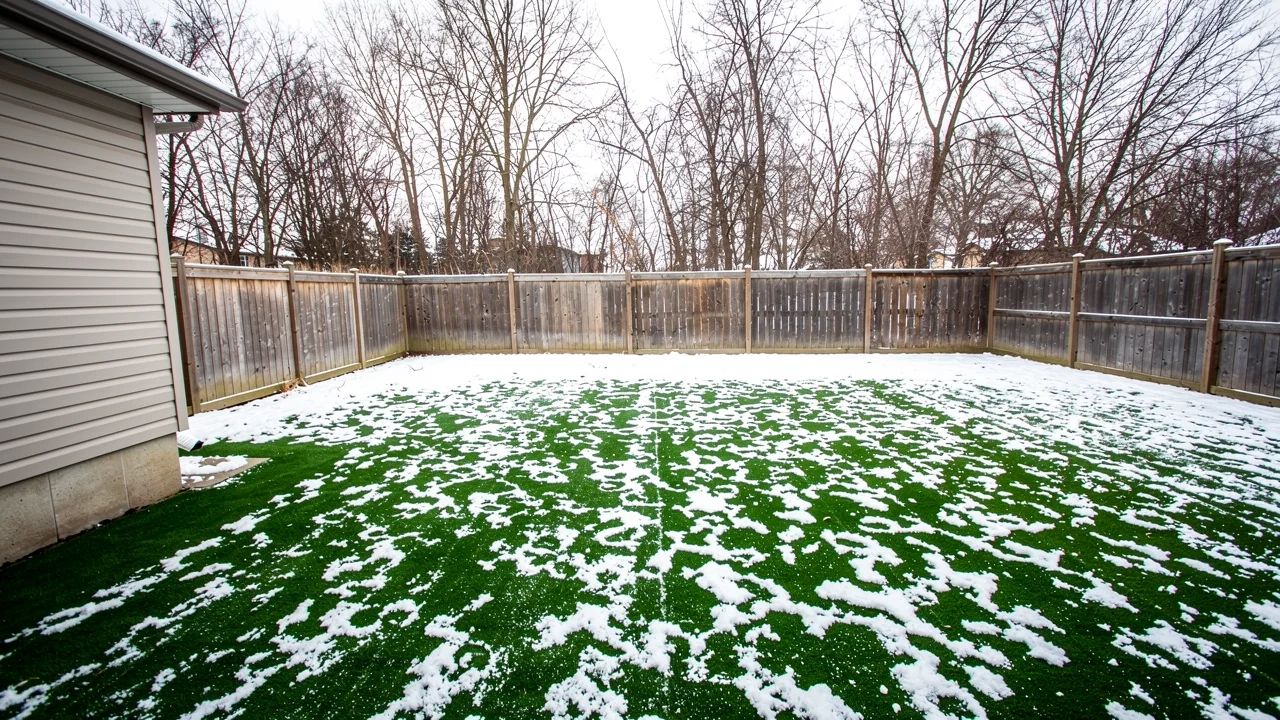
One of the most common questions Windsor homeowners ask before investing in artificial turf is whether it holds up through Ontario winters. It's a fair question — Windsor's climate includes significant freeze-thaw cycling, occasional heavy snow, and periods of hard frost from December through March. The short answer is that quality turf, properly installed, handles Windsor winters well. Here's the longer answer.
How Freeze-Thaw Cycles Affect Artificial Turf
The biggest winter risk for artificial turf in Windsor isn't the turf itself — it's the sub-base beneath it. A poorly installed sub-base can heave during freeze-thaw cycles, causing the surface to buckle or develop soft spots. A properly compacted 4-inch crushed stone sub-base handles Ontario's temperature swings without moving. The turf material itself — polyethylene and polypropylene blades — is not damaged by freezing. It becomes slightly stiffer in very cold temperatures, similar to natural grass in winter, but returns to its normal feel as temperatures rise.
Snow and Ice on Artificial Turf
Snow sits on artificial turf exactly as it does on natural grass. You can shovel it — use a plastic shovel rather than metal to avoid catching the turf backing — or let it melt naturally. The turf itself doesn't absorb moisture the way soil does, so once snow melts, the surface drains quickly through the permeable backing and sub-base. There's no mud, no bare patches, and no spring thaw damage. Ice can form on the surface in freezing rain events, but it thaws and drains without leaving the turf worse off.
What Windsor Homeowners See in Spring
This is where artificial turf earns its keep in Essex County. When the snow melts and natural lawns in Windsor and LaSalle are showing bare patches, brown grass, and mud, artificial turf bounces back to its original appearance. There's no overseeding, no fertilizing, and no waiting for the lawn to recover. Homeowners who've installed turf in Windsor consistently say that the spring reveal — going from a muddy mess every April to a clean, green yard — is one of the biggest payoffs they didn't expect.
Winter Maintenance for Artificial Turf in Windsor
Artificial turf requires almost no winter maintenance. If you want to clear snow for aesthetic reasons or to use the space, a plastic shovel works well. Avoid using road salt on or near the turf — while small amounts won't cause immediate damage, repeated salt exposure can affect the backing over time. If a metal shovel or snowblower clips the surface, check the affected area in spring; minor blade damage can usually be spot-repaired without replacing the whole installation. Beyond that, artificial turf in Windsor winters is genuinely low-maintenance.
Year-Round Green: The Windsor Turf Advantage
Windsor's natural lawn season runs from roughly May through October. That's five months of green lawn and seven months of dormancy, mud, or bare patches. Artificial turf is green year-round. For front lawns where curb appeal matters, or backyards where kids and pets use the space outside of the summer window, that year-round consistency is a meaningful difference. Windsor Turf Pros has installed turf across Walkerville, Riverside, LaSalle, Tecumseh, and Amherstburg — all neighbourhoods that see the same freeze-thaw conditions — and the longevity of properly installed turf in this region is well-established.
Frequently Asked Questions
Does artificial turf crack or break in Windsor's cold winters?
No. Quality polyethylene turf blades are flexible and cold-resistant — they don't crack or become brittle in Ontario temperatures. The blades may feel slightly stiffer in very cold weather, similar to frozen natural grass, but return to normal as temperatures rise.
Can I shovel snow off artificial turf?
Yes. Use a plastic-edged shovel to avoid catching the backing. You can also let snow melt naturally — artificial turf drains quickly once the snow is gone and leaves no mud or bare patches behind.
Will artificial turf heave or shift during Windsor's freeze-thaw cycles?
Not with a proper installation. A compacted 4-inch crushed stone sub-base is the standard in Ontario for this reason — it handles freeze-thaw cycling without shifting. A shallow or poorly compacted base is the root cause of heaving issues.
Does artificial turf look bad in winter compared to summer?
No — it looks the same year-round. That's one of the main reasons Windsor homeowners choose it. While natural lawns go dormant and brown from November through April, artificial turf stays green and presentable through the full winter.
What happens to artificial turf drainage when the ground is frozen in Windsor?
When the ground is frozen solid, drainage slows as expected — the same as with any permeable surface. Water pools briefly on the surface and drains as temperatures rise. This is normal and doesn't damage the turf or the sub-base.
Ready to Get Started in Windsor?
Windsor Turf Pros serves Windsor and the surrounding area. Get a free, no-obligation quote today.